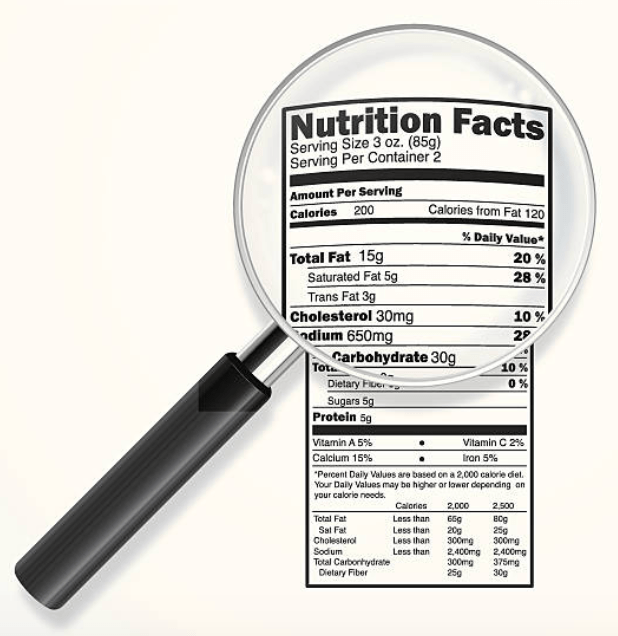
There are 4 calories per 1 gram of carbohydrates, 4 calories per 1 gram of protein, and 9 calories per 1 gram of fat. If you had one gram of each of these in one product it should add up to 17 calories. I have found that this is not always the case so I decided to search for why this happens.
How Manufacturers Calculate Calories
4:4:9 – This method multiplies each gram of protein and carbohydrate by 4 and each gram of fat by 9. The sum of these three macronutrients equals the total calories.
4:4:9 minus insoluble fiber – This method does the same as the 4:4:9 method but allows insoluble fiber to be subtracted from carbohydrates.
Atwater conversion factor – This method measures protein, carbohydrates, fat and alcohol as 4:4:9:7 but it accounts for losses in digestion, absorption, and urinary excretion of urea.
Rounding errors – When a product has less than 5 calories per serving it is rounded down to zero. If there are 50 or fewer calories per serving the FDA allows rounding the the nearest 5 increment. If the product has more than 50 calories per serving then it can be rounded to the nearest 10 increment.
Alcohol has 7 calories to the gram but the alcohol grams are not required to be put on nutrition labels. The calories will include these but the macronutrients will not appear to add up if only considering what is written on the label.
Bomb calorimetry data – This method subtracts 1.25 gram of protein to correct for incomplete digestibility.
Conclusion
The FDA has certain regulations that allow for several ways to come up with that top caloric number you see on every food package you have. If you are only reading it to align with the first method I mentioned, like I used to, then the numbers are not always going to add up. This post is meant to educate and hopefully clear up misunderstandings on why the nutrition labels seem wrong at times.
It’s always a good idea to understand what you are fueling your body with and understanding nutrition labels is a great place to start!
References
CHAPTER 3: CALCULATION OF THE ENERGY CONTENT OF FOODS – ENERGY CONVERSION FACTORS, 1998, http://www.fao.org/3/Y5022E/y5022e04.htm.
eCFR – Code of Federal Regulations. (2020, April 7). Retrieved from https://www.ecfr.gov/cgi-bin/text-idx?c=ecfr&sid=563f0b6235da3f4c7912a64cbceec305&rgn=div8&view=text&node=21:2.0.1.1.2.1.1.6&idno=21
Food Labeling: Revision of the Nutrition and Supplement Facts Labels: Guidance for Industry. (2020, January). Retrieved from https://www.fda.gov/media/134505/download
The_Enginerd. (2014, November 25). Calories and Macros not adding up? Here’s probably why. Retrieved from https://community.myfitnesspal.com/en/discussion/10025962/calories-and-macros-not-adding-up-heres-probably-why
 Simplifying Health