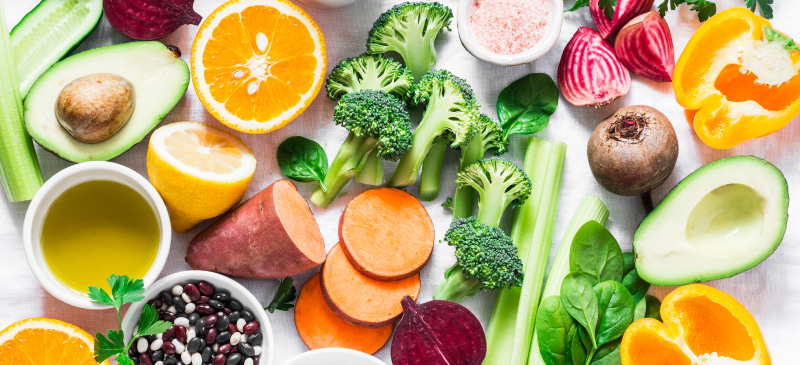
Everyone knows that micronutrients are important but many people don’t know what this term refers to. Micronutrients consist of vitamins and minerals. Like myself, many people grew up thinking these terms were defined as, “pills that people take.” In actuality, all vitamins and minerals should and can be consumed through food without supplementation! The real definitions of these pills are as follows. Vitamins are organic compounds that the body needs and cannot produce itself. Minerals are elements of the earth that the body needs to function properly. I will be focusing on vitamins in this post and minerals in another.
Water-soluble Vitamins
There are two types of vitamins: fat-soluble & water-soluble. Fat-soluble are stored in the liver but water-soluble are eliminated daily so they must be replaced in small amounts daily. Water-soluble vitamins consist of vitamin C and your B vitamins: B1, B2, B3, B6, folic acid, B12, biotin, and pantothenic acid. Overconsumption of any of these vitamins rarely, if ever, leads to any negative side effects with the exception of vitamin C. Be sure to only take 75mg/day for women and 90 mg/day for men.
Why do Vitamins Matter to You?
B Vitamins include B1, B2, B3, B6, B12, folic acid, biotin, and pantothenic acid. These all play a role in energy production, appetite, nervous system functioning, good vision, healthy skin, enzyme function, digestion, metabolism, red blood cell formation, insulin and hemoglobin production, building genetic material, lowering risks for birth defects and coronary artery disease as well as several other functions.
Vitamin C serves a good amount of other purposes. This vitamin is extremely important for collagen synthesis, wound healing, bone and tooth formation, strengthening blood vessel walls, proper immune system functioning, increasing absorption and utilization of iron as well as acting as an antioxidant. This vitamin can specifically be obtained through citrus fruits, like an orange, and some vegetables.
Good Sources for B Vitamins and Vitamin C
Whole grains, peas, legumes, eggs, dark green vegetables, milk, peanuts, fish, citrus fruits, meats, oysters, and liver.
Basically, if the average person has a well rounded diet, he or she should be able to get all of the nutrients they need from food. All vitamins except B12 can be obtained through whole grains, legumes, vegetables, and citrus fruit. B12 can be supplemented to aid vegans and vegetarians.
Fat-soluble Vitamins
Fat-soluble vitamins include A, D, E, and K. Unlike water-soluble vitamins, these are stored in the liver and are excreted much slower, therefore, do not need daily replacement. Necessary supplementation of these vitamins is rare and may do more harm than good if done without medical consultation.
What do these Do?
Vitamin A: aid light adjustment in eyes, bone growth, tooth development, reproduction, cell division, gene expression, the immune system, mucous membranes, antioxidant activity
Vitamin D: aids formation and maintenance of bones, immunity, and cell growth
Vitamin E: acts as an antioxidant, protects vitamin A, vitamin C, red blood cells, and essential fatty acids
Vitamin K: aids blood clotting, bone health, and protein production for blood, bones and kidneys
Good Sources for Vitamins: A, D, E, & K
Vitamin A: orange and dark green vegetables, dairy
Vitamin D: mainly sunlight; food sources: milk and oily fish; vegan sources: mushrooms, fortified tofu or supplement
Vitamin E: vegetable oil, fruits, vegetables, grains, nuts and seeds
Vitamin K: vegetables and vegetable oil
Overwhelmed ???
All in all, necessary vitamins can be consumed through a well balanced diet no matter if one consumes animal products or not. I encourage you to branch out and try new vegetables, specifically to broaden your nutrient dense food choices. One should consult their physician to find any deficiencies that should be supplemented but generally it is not needed. Aim to consume all nutrients through food before adding in supplements. Look into B12 and vitamin D deficiencies if your diet is plant based to see if supplementation applies to you.
 Simplifying Health