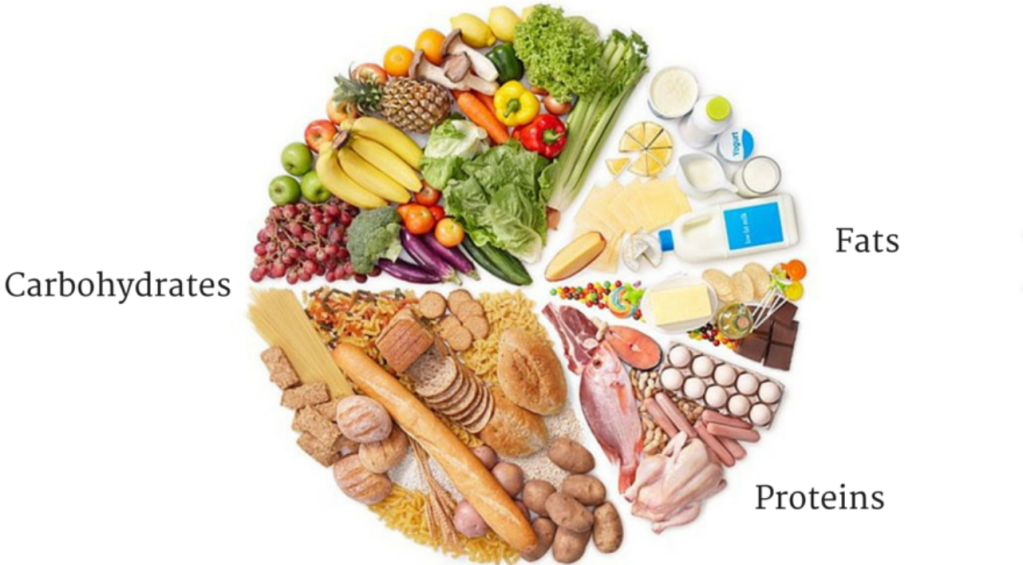
Anything and everything nutrition is my passion so, naturally I go on rants nerding out to pretty much everyone that hangs around me long enough. One time my friend actually got a chance to speak up and asked, “what are macros?” This was shocking to me because I didn’t even recognize that people are not aware of this term. With this being said: here are SOME of the basics that everyone should learn.
Macronutrients (macros)
- Carbohydrates
- Fats
- Protein
Carbohydrates
The main energy source for everything your body does! Eat them!! Carbohydrates are indispensable and have an unnecessary bad reputation. Carbohydrates give your body sugar for energy and fiber for digestive health. When lacking carbohydrate stores, your body will turn to protein for fuel which means less protein for tissue (muscle) repair and enzyme production. Not good!! There are 4 calories for every 1 gram of protein consumed. Carbs are important and should generally make up the largest percentage of calories that you consume at around 50%. For a 2,000 calorie day, one would consume 250g of carbs.
Carbs come in the form of sugar, starch, or fiber. Individuals watching their blood-glucose levels should be mindful of what form is in the carbs they are consuming. Starch and fiber are complex carbs that both aid in digestion. Healthier food choices containing these types would be brown rice, whole grains, potatoes, some fruits, oats, vegetables, and beans.
Fat
For starters, fat doesn’t make you fat. There are 9 cal per 1 gram of fat. This means that calories from fat add up two times faster than calories from protein or carbs do. This only becomes a problem when a person consumes more grams of fat than necessary which will lead to a caloric surplus. Overtime, this caloric surplus adds up and turns into excess stored fat. Fats are used as stored energy, hormone precursors, protection, insulation, satiety, and vitamin carriers. About 30% of daily caloric intake should come from fat. For a 2,000 calorie day, one would consume 67g of fat.
Fats come in the form of monounsaturated, polyunsaturated, saturated, and trans. Unsaturated fat is liquid at room temperature. Unsaturated fat is found in oils, certain fish, nuts, and avocados. Saturated fat is found in meat, oils, dairy, and processed foods such as chips and pastries. One should aim to consume more grams of unsaturated fat than saturated fat. Trans fat should be avoided as it is artificially formed and has been shown to increase LDL cholesterol which increases the risk of cardiovascular disease. This will be found in fast food and processed foods; avoid ingredient “partially hydrogenated oils”.
Protein
People are generally eating too much or too little protein. It plays a very important role in the body that one should purposefully implement everyday. Protein comes in the form of amino acids. It aids in tissue repair, energy production, hormone production, enzyme activity, transportation of molecules and antibody production. There are 4 calories for every 1 gram of protein. This macronutrient should make up around 20% of total caloric intake. For a 2,000 calorie day, one would consume 100g of protein. Sources of protein can be found in meat, fish, poultry, dairy, vegetables, nuts and seeds. If avoiding meat or are full vegan, supplement with B12 vitamins and vegan protein powder.
Caloric Intake
Making sure you are consuming enough of each macronutrient is important to be sure your body is getting all of the nutrients that it needs to run efficiently. This being said, too much of any nutrient may lead to excess calorie intake which ends up as unhealthy body fat. It may be helpful to log your food in an app like myfitnesspal to start getting an understanding of what and how much you are consuming everyday. I strongly recommend consulting a dietitian for specific macronutrient and caloric intake measurements pertaining to your goals. Use this app as a tool for learning what is in the food you are eating rather than a weight loss guide because it may give you too low of a caloric intake goal based on the information you put it.
I hope this helped you get a better understanding of some of the foundational nutrition information one should know to make healthy decisions. Thank you for reading!
 Simplifying Health
This is great! My office is getting a good education from you.
LikeLiked by 2 people
Lots of content and great information!
LikeLiked by 1 person